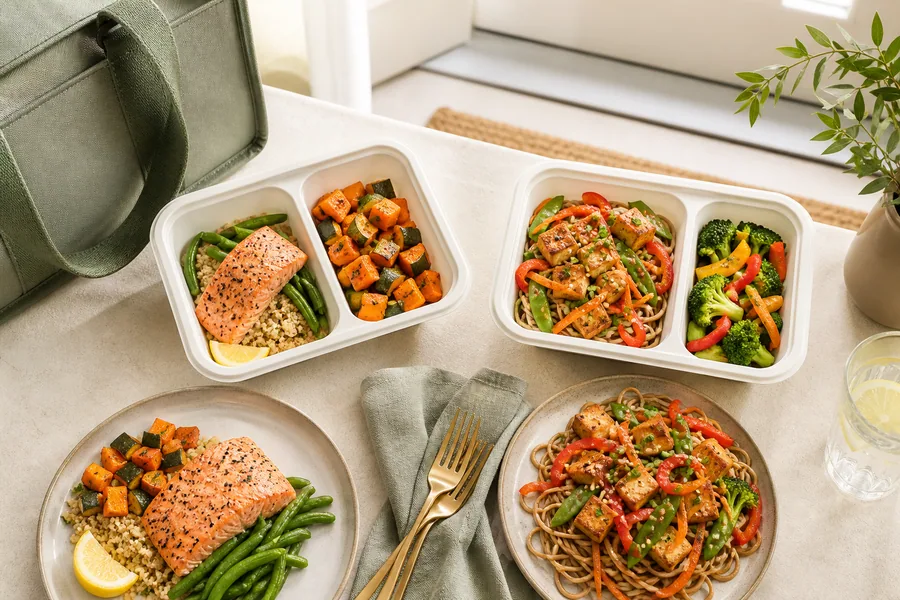
Weight-loss meals delivered to your door can reduce shopping, preparation, and portion decisions. They can also be expensive, repetitive, or difficult to manage if the subscription terms do not fit your routine. The best comparison looks beyond the promotional price and asks what will be useful after the first box.
Prepared meals are a convenience tool, not a treatment. No service can guarantee weight loss, and a branded menu label does not make a meal appropriate for every person.
Start with the service format
Prepared-meal services generally send refrigerated or frozen meals that need reheating. Meal kits send ingredients that still require cooking. Some local companies provide same-day or limited-area delivery.
Choose the format based on the work you want to remove. A meal kit may reduce planning and shopping but still create prep and dishes. A prepared meal reduces more steps but may offer less customization.
Calculate the real price per meal
Use the regular recurring price, not only the introductory discount. Add shipping, service fees, taxes where applicable, and required extras. Divide the total by the number of meals you will receive.
Also consider usable value. If the minimum order is twelve meals but you can only store or eat six, the advertised unit price is misleading for your situation. A smaller order at a higher per-meal price may cost less overall.
Review the menu before entering payment details
Look at at least two upcoming menus. Count options you would genuinely order, accounting for allergies, preferences, and foods you tolerate. A large headline menu number is less important than relevant variety.
Check whether filters show useful nutrition information or simply marketing categories. Open individual meal pages and inspect the full label. Confirm whether meals can be modified and how substitutions are handled.
Compare portions and nutrition visibility
Serving size should be clear. Review protein, fiber, sodium, saturated fat, added sugars, ingredients, and allergens. If only selected nutrients are shown, ask whether complete labels arrive with the meals.
Portion needs vary. A meal that is smaller than your needs may require a side. A larger meal may provide leftovers if it can be stored safely. Do not assume the service’s portion is a personal prescription.
Check delivery and storage fit
Use the ZIP-code tool for your exact address. Note delivery days, ability to choose a window, carrier information, and what happens after a delay. Review packaging and food-safety instructions.
Before ordering, measure refrigerator and freezer space. Refrigerated meals usually have a shorter use window, while frozen meals require adequate freezer capacity. A large order can create pressure to eat meals before they spoil.
Read subscription controls first
Find the skip, pause, and cancellation instructions before checkout. Record the weekly cutoff and the time zone. Check whether skipping one week changes the next delivery and whether cancellation can be completed online.
A service is less convenient if account controls are hard to find. Take a screenshot or save the confirmation when changing a plan.
Use a neutral comparison scorecard
Score each service from one to five on:
- Relevant menu variety
- Complete nutrition visibility
- Portion flexibility
- Full recurring price
- Delivery fit for your address
- Storage requirements
- Skip, pause, and cancellation ease
- Packaging and reheating practicality
Weight the factors that matter most to you. A reader with limited freezer space may value fresh delivery. Someone outside a metro area may prioritize shipping reach.
Plan the first order conservatively
Start with the smallest practical order. Choose different meal styles to test portions, flavors, textures, and reheating. Avoid buying a large bundle based only on a promotion.
After the first delivery, note which meals you finished, whether sides were needed, how the packaging worked, and the actual time saved. Review the next menu before the cutoff.
Keep medical claims in perspective
Terms such as weight-loss friendly or GLP-1 friendly are not personalized medical endorsements. A meal service does not know your medication, health history, allergies, or nutrient needs unless it provides a qualified clinical service under clear terms.
Use your healthcare team for individualized nutrition guidance. Contact the provider promptly for food-safety problems and your clinician for persistent symptoms or difficulty maintaining adequate food and fluids.
Sources and further reading
- NIDDK guidance on food portions
- NIDDK guidance on safe weight-loss programs
- Dietary Guidelines for Americans
Prices, menus, service areas, and subscription terms change. Verify current provider information before ordering.