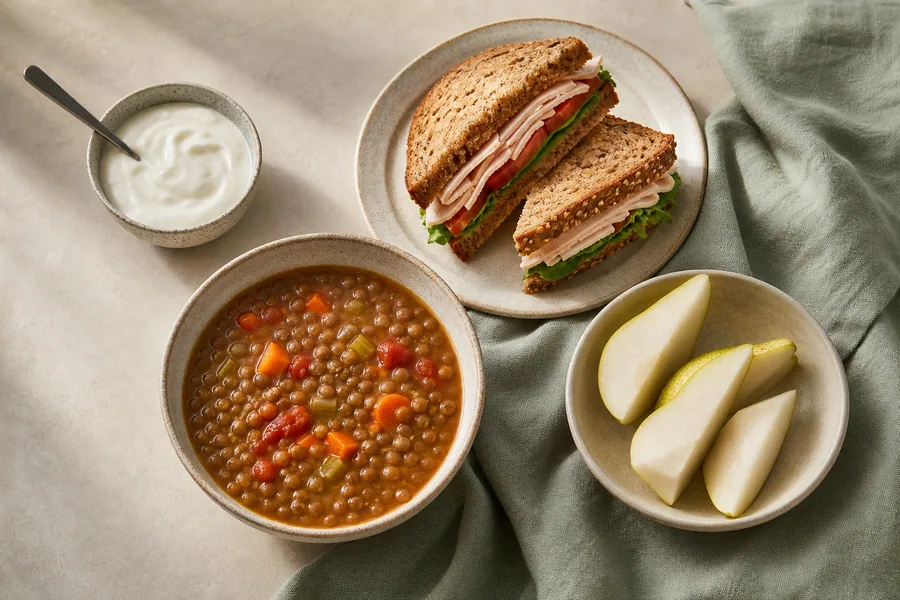
Easy weight-loss meals are not special diet products. They are meals with enough structure to support your plan and little enough friction to happen on a difficult day. The best backup meal is not the one you think you should want. It is the one you will prepare and eat.
Weight outcomes depend on patterns and many personal factors. These ideas focus on availability, balance, and satisfaction rather than promises.
Build a three-level backup system
Level one: assemble. You have five to ten minutes and basic energy. Make a sandwich with fruit, a grain bowl with ready ingredients, or tacos with canned beans.
Level two: heat. You can use a microwave or stovetop. Warm soup, a frozen entree, eggs, precooked grains, or frozen vegetables.
Level three: open and eat. Choose yogurt and fruit, tuna with crackers, hummus and pita, cottage cheese and tomatoes, or another no-cook combination.
Stock at least one option at each level. This matches the meal to the day.
Eight easy meal combinations
- Rotisserie chicken, microwaveable rice, frozen vegetables, and salsa
- Canned lentil soup, whole-grain toast, and yogurt
- Tuna, white beans, chopped vegetables, and crackers
- Eggs, frozen peppers, toast, and fruit
- Greek yogurt, oats, berries, and nuts
- Hummus, pita, vegetables, olives, and an egg
- Frozen grain bowl with edamame or leftover chicken
- Turkey sandwich, bagged salad, and fruit
Swap ingredients to fit allergies, preferences, culture, budget, and medical guidance.
Make the freezer work harder
Frozen vegetables and fruit reduce spoilage and require little preparation. Freeze individual portions of chili, soup, rice, cooked beans, or casseroles. Label the container with the name and date.
Commercial frozen meals can be useful too. The best choice is not automatically the one with the lowest calories. Check whether the meal has a meaningful protein source and enough food for you. Add produce, soup, yogurt, or bread if needed.
Use convenience strategically
Pre-cut produce, cooked grains, peeled eggs, and prepared proteins may cost more per unit. They can still provide value if they reduce waste or replace more expensive last-minute options.
Choose convenience where the task is hardest. If chopping is the barrier, buy pre-cut vegetables but cook your own grain. If cleanup is the barrier, use a frozen entree and a piece of fruit.
Create a visible list
Write your backup meals on the refrigerator or inside a cabinet. Include the location of each item. Decision fatigue can make available food feel invisible.
Keep the list short and update it when preferences change. If a product remains uneaten for months, it is not a dependable backup for your household.
Compare meals by total effort
Preparation time is only part of effort. Count shopping, equipment, dishes, storage, and cleanup. A fifteen-minute recipe that creates several pans may not be easier than a prepared meal.
Similarly, delivery can reduce cooking but add account management, order deadlines, and packaging. Choose the kind of convenience that solves your main problem.
Avoid compensating for the easy choice
An unplanned frozen meal or takeout order does not require skipping the next meal. Compensation can increase hunger and reinforce all-or-nothing thinking. Return to the usual routine.
If a meal was not satisfying, note what was missing. Add a side next time or choose a different backup. Treat the experience as information.
Keep an eye on adequacy
Weight-management marketing often celebrates eating less without asking whether intake remains adequate. Repeated fatigue, dizziness, intense hunger, food preoccupation, or rapid unintended changes deserve attention from a qualified professional.
If medication reduces appetite, talk with the prescribing team about persistent difficulty eating or drinking. Do not change medication based on an online meal guide.
Make the system portable
Easy meals are more useful when they work outside the kitchen. Keep a shelf-stable option at work or in a travel bag, such as tuna or bean packets, whole-grain crackers, nuts, or a bar you have already tried. Add fresh food when available.
For travel-return days, leave one freezer meal and one breakfast option at home before you go. That small step can prevent an empty refrigerator from turning into an expensive, stressful decision.
If you regularly eat in a car, at a desk, or between appointments, choose foods that can be stored safely and eaten without difficult assembly. Convenience should account for the setting, not only preparation time.
Refresh the backup list each month
Check dates, replace used items, and remove foods you no longer enjoy. Rotate one new option at a time instead of buying a large collection. A short, current list is more dependable than a crowded freezer of forgotten meals.
Sources and further reading
- NIDDK guidance on healthy eating
- NIDDK food portions and budget guidance
- Dietary Guidelines for Americans
This backup-meal framework is general education, not an individualized weight-loss program.