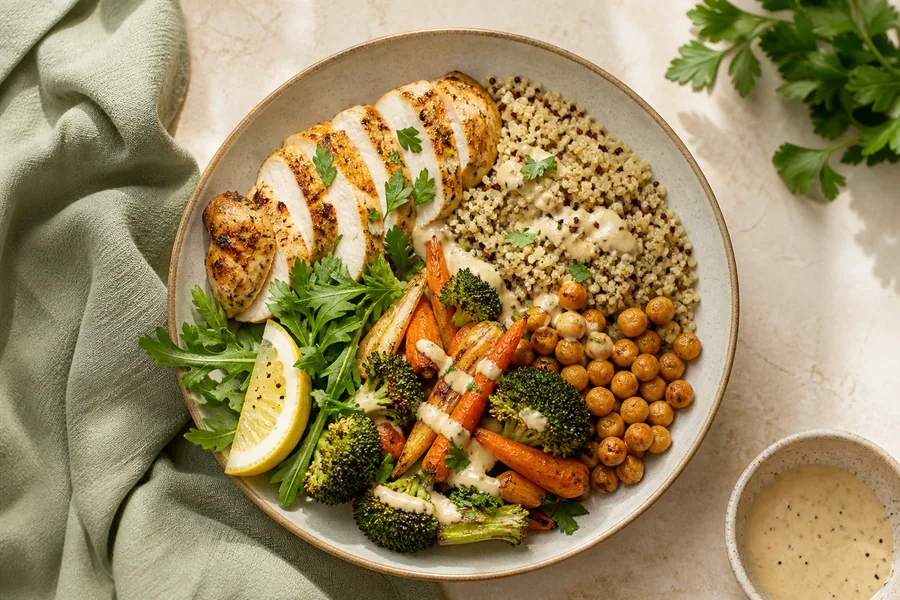
Healthy meals for weight loss do not need to look like tiny salads or require a separate set of groceries. A more useful starting point is a meal you can repeat: it fits your schedule, contains foods you like, and leaves you comfortably satisfied. Weight changes are influenced by the overall pattern of eating, activity, sleep, health, medications, and other factors. One dinner cannot promise an outcome.
This guide focuses on meal quality and structure rather than a rigid calorie prescription. If you have diabetes, kidney disease, a history of disordered eating, food allergies, or other clinical needs, use individualized advice from a qualified professional.
Start with four flexible parts
A practical plate can be assembled from four components:
- A protein food. Options include fish, poultry, eggs, yogurt, cottage cheese, tofu, tempeh, beans, lentils, and lean meats.
- Vegetables or fruit. Fresh, frozen, canned, roasted, blended, or raw all count. The format that is affordable and appealing is often the best one.
- A fiber-rich carbohydrate. Try oats, brown rice, quinoa, potatoes with skin, whole-grain bread, corn, beans, or fruit.
- Flavor and satisfaction. Olive oil, avocado, nuts, seeds, cheese, pesto, salsa, or another sauce can make a simple meal feel complete.
These are building blocks, not mandatory plate percentages. A soup, sandwich, bowl, curry, or breakfast can contain the same parts without looking like a divided plate.
Build meals around what you will actually eat
Planning often fails when it assumes unlimited time and enthusiasm. Begin with a realistic anchor. That could be rotisserie chicken, frozen vegetables, canned beans, cooked grains, eggs, or a prepared meal. Add one or two items instead of cooking every component from scratch.
For breakfast, oatmeal with Greek yogurt and berries combines carbohydrate, fiber, protein, and produce. Lunch might be a turkey and vegetable sandwich with fruit. Dinner could be salmon, frozen green beans, and a microwaveable grain. A meatless option could pair lentil soup with a side salad and whole-grain toast.
Convenience is not a nutritional failure. It can make a balanced choice more available on busy days.
Use portions as feedback, not a test
A portion is the amount you choose to eat. A serving size on a label is a standardized reference, not a personal instruction. Start with an amount that seems manageable, eat at a comfortable pace, and notice hunger and fullness. You can save extra food or have more.
People often assume the cheapest meal is the one with the most food. Value also includes how much you use. A very large meal that repeatedly becomes waste may cost more per useful serving than a smaller option. Leftovers are a benefit only if you want and safely store them.
Look beyond calories on the label
Calories describe energy, but they do not tell the whole story. For packaged or delivered meals, also compare:
- The listed serving size and servings per container
- Protein and dietary fiber
- Sodium, especially if you have been advised to limit it
- Saturated fat and added sugars in the context of the full day
- Ingredients that affect allergies, preferences, or tolerance
- Whether the portion can be divided or paired with a side
Two meals with similar calories may feel very different depending on their volume, protein, fiber, and flavor. Choose the combination that fits your needs instead of chasing the lowest number.
Make the default easier
Keep two or three backup meals for days when plans change. Useful combinations include eggs and whole-grain toast, canned tuna with crackers and vegetables, frozen grain-and-bean bowls, yogurt with fruit and nuts, or a freezer meal with an easy produce side.
It also helps to repeat components. Roast one tray of vegetables, cook one grain, and choose two proteins. Mix them into bowls, wraps, salads, or soups over several days. Repetition lowers effort without requiring identical meals.
A one-week planning rhythm
Before shopping, check your calendar. Identify the nights you can cook, the nights you need a fast option, and the meals likely to create leftovers. Choose three breakfasts, three lunches, and three dinners that share ingredients. Fill the remaining spaces with leftovers or backup meals.
Ask four questions about each planned meal: Where is the protein? Is there produce? Is there a satisfying carbohydrate? What gives it flavor? If a meal is missing something, add the easiest available option rather than redesigning it.
Keep expectations realistic
A healthy eating pattern should leave room for culture, pleasure, restaurants, celebrations, and changing appetite. Progress does not require perfect compliance with a menu. It is more useful to notice which meals keep you satisfied, which ingredients go unused, and which routines make the next decision easier.
If intentional weight loss is appropriate for you, a healthcare professional can help set a safe goal and account for medications and medical history. Seek help if eating rules are creating anxiety, guilt, loss of control, or inadequate intake.
Sources and further reading
- NIDDK guidance on food portions
- USDA MyPlate protein foods
- NIDDK guidance on eating and physical activity
This article provides general education and does not replace individualized medical or nutrition advice.