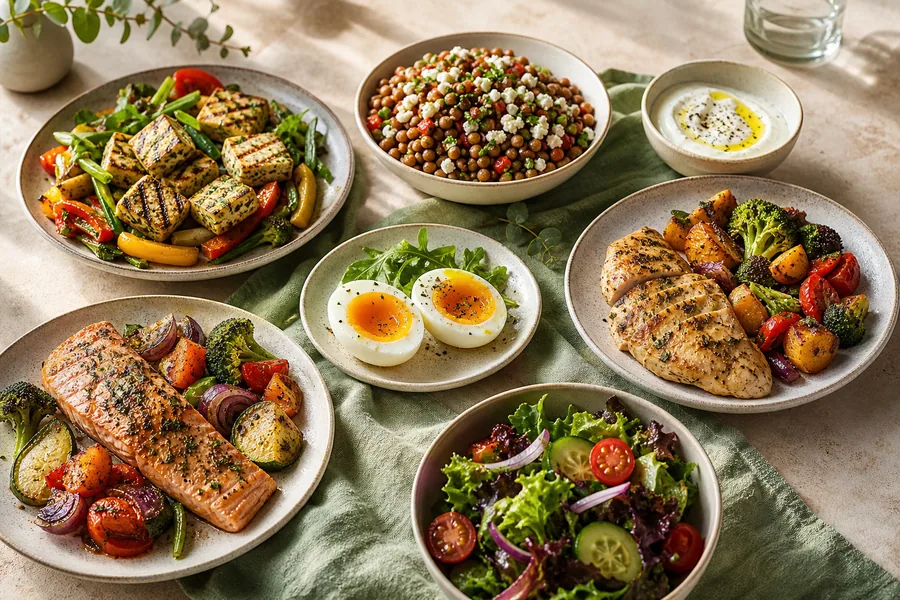
High-protein meals are popular in weight-management plans because protein contributes to body tissues and can make meals more satisfying. But a useful protein-forward meal is not simply the largest possible serving of meat. It also leaves room for vegetables, fruit, fiber-rich carbohydrates, fats, and flavor.
Protein needs vary. Age, body size, activity, pregnancy, health conditions, and total food intake all matter. If you have kidney disease or another condition that affects nutrition, use a target set by your healthcare team rather than a number from a generic menu.
Think protein anchor, not protein contest
Start by identifying the main protein source. At breakfast, that might be eggs, Greek yogurt, cottage cheese, tofu, or beans. At lunch, it could be tuna, chicken, lentils, tempeh, or turkey. Dinner might feature fish, lean meat, poultry, tofu, beans, or a combination.
Then build around it. Add produce for color and variety, a carbohydrate for energy and fiber, and enough sauce or fat to make the food enjoyable. A chicken breast eaten alone may contain protein, but chicken with roasted vegetables, potatoes, and pesto is a more complete meal.
Ten practical meal ideas
- Greek yogurt with oats, berries, and chopped nuts
- Scrambled eggs with vegetables and whole-grain toast
- Tofu scramble with potatoes and salsa
- Lentil soup with yogurt and a side salad
- Tuna and white-bean salad with crackers
- Chicken, brown rice, and roasted vegetable bowl
- Salmon with potatoes and green beans
- Turkey and avocado sandwich with fruit
- Tempeh stir-fry with vegetables and noodles
- Bean chili topped with cheese or plain yogurt
The exact protein amount depends on the portion and product. Check labels when a specific number matters.
Distribute protein in a way that fits your day
Some people find it easier to include protein at several meals than to rely on one very large dinner. A breakfast with yogurt or eggs, a lunch with beans or fish, and a dinner with tofu or chicken can spread opportunities across the day.
This can be especially practical when appetite is smaller. Smaller portions may be easier to manage than trying to finish a dense meal at once. That does not mean you must eat on a strict schedule. Use hunger, tolerance, routine, and professional guidance.
Keep fiber and plants on the plate
Protein-focused plans can accidentally push out fruits, vegetables, whole grains, and legumes. Those foods provide fiber and a range of nutrients. Build a bowl with half grain and half lentils rather than only meat and cheese. Add berries and oats to yogurt. Serve eggs with vegetables and toast.
If you increase beans or other fiber-rich foods, do so gradually if your digestion is sensitive. Fluids and overall intake matter too. Persistent constipation, diarrhea, pain, or vomiting deserves clinical guidance.
Compare labels carefully
On prepared meals and protein products, check the serving size first. The protein number only applies to that listed serving. Then look at sodium, saturated fat, dietary fiber, added sugars, and ingredients.
A product with a large protein number is not automatically the best choice. Consider how often you will eat it, how it tastes, what else is in the meal, and whether a regular food could do the same job at a lower cost.
Protein bars and shakes can be convenient, but they are not required. Some people prefer chewing a meal, while others find a drink useful when time or appetite is limited. Follow storage instructions and check for allergens.
Build high-protein meals on a budget
Eggs, canned tuna or salmon, beans, lentils, peanut butter, milk, yogurt, and tofu can offer useful protein at different price points. Compare unit prices rather than package prices alone. Store brands and larger containers may cost less, but only when you can use them safely before they spoil.
Stretch higher-cost proteins through mixed dishes. Add beans to ground meat in chili, combine chicken with lentils in a bowl, or use eggs and tofu together in a scramble. Frozen fish and poultry can reduce waste because you cook only what you need.
When “high protein” needs context
Weight loss should not come at the expense of adequate nutrition. If you are regularly too full to eat, losing weight faster than intended, feeling weak, or struggling to maintain fluid intake, contact your healthcare team. These are not problems to solve by forcing a larger protein target.
Likewise, protein does not replace resistance activity, sleep, or medical care. It is one part of a wider health pattern.
Sources and further reading
This guide offers general education, not a personal protein prescription or a guarantee of weight loss.