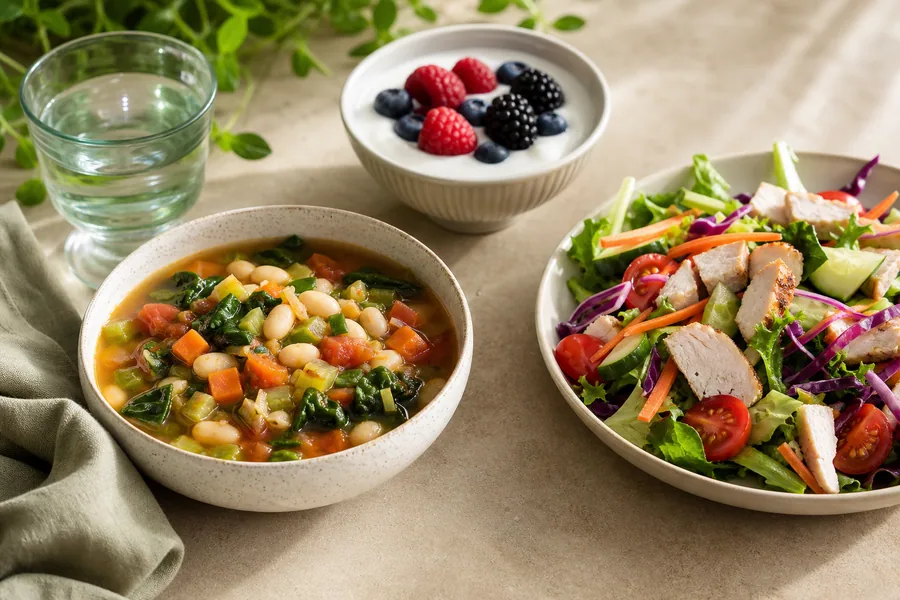
Low-calorie meals are often marketed as the fastest route to weight loss. The calorie number can be useful, but it is only one piece of information. A meal also needs to provide nourishment, taste good, and fit the person eating it. Too little food can lead to hunger, fatigue, food preoccupation, or difficulty meeting nutritional needs.
There is no universal calorie target for breakfast, lunch, or dinner. The right amount depends on individual needs and the full pattern of eating. This guide explains how to make a lower-calorie choice more useful without turning the meal into a numbers contest.
Start with nutrient density
Nutrient-dense foods provide useful nutrients relative to their energy. Vegetables, fruit, whole grains, beans, lean proteins, seafood, eggs, lower-fat dairy, nuts, and seeds can all contribute. Some are higher in calories than others, but that does not make them unhealthy.
A plate of vegetables alone may be low in calories but incomplete. Add tofu, chicken, beans, fish, eggs, or another protein. Include a carbohydrate such as potatoes, rice, bread, or fruit. Add enough fat or sauce for flavor and satisfaction.
Use high-volume foods as additions
Foods with water and fiber can make a meal feel more substantial. Examples include vegetable soup, berries, melon, leafy greens, tomatoes, zucchini, mushrooms, broccoli, and cauliflower.
Use them to build the meal, not to crowd out everything else. Add vegetables to an omelet and serve toast. Stir extra vegetables into pasta with chicken or beans. Pair soup with a sandwich or yogurt. Volume works best alongside balance.
Seven lower-calorie meal patterns
- Vegetable and egg scramble with toast and fruit
- Chicken vegetable soup with whole-grain crackers
- Tofu stir-fry with vegetables and a modest portion of rice
- Tuna and white-bean salad with lemon vinaigrette
- Turkey sandwich with crunchy vegetables and fruit
- Baked fish with green beans and potatoes
- A prepared entree with a vegetable or fruit side
Exact calories depend on ingredients and portions. These are patterns, not fixed recipes.
Read the serving line first
On a Nutrition Facts label, begin with serving size and servings per container. A package that looks like one meal may contain more than one listed serving. The remaining numbers apply to the stated serving.
Then review protein, fiber, sodium, saturated fat, added sugars, and ingredients. For frozen meals, compare products within the same category. A grain bowl and a small soup are not interchangeable just because their calorie numbers match.
Watch for the hidden add-on problem
A low-calorie entree may need several sides before it feels like a meal. That is not automatically a problem, but include those additions when comparing cost and convenience. A slightly more substantial entree may be a better value than a tiny one plus several extras.
Restaurant menu calories can help with comparison where available. They do not tell you how filling a meal will be or which option best meets your needs. Choose based on the whole situation.
Keep flavor in the equation
Plain food is not inherently more supportive of weight management. Herbs, spices, citrus, vinegar, mustard, salsa, pickled vegetables, and broth add flavor. Oils, cheese, avocado, nuts, and creamy sauces are more energy dense, but thoughtful amounts can make a meal enjoyable and satisfying.
The goal is not to eliminate flavor to reduce calories. It is to choose an amount that supports the meal you want to eat.
Notice signs that the plan is too light
Repeated hunger soon after meals, low energy, dizziness, difficulty concentrating, feeling cold, or becoming preoccupied with food can signal that intake needs attention. These symptoms have multiple possible causes, so do not self-diagnose. Bring persistent concerns to a healthcare professional.
If you use medication that changes appetite or glucose, ask your prescribing team how meal timing and intake fit your care plan. Do not adjust medication based on a meal guide.
Build a more realistic target
Instead of asking for the lowest-calorie meal, ask for a meal that:
- Contains a meaningful protein source
- Includes produce or another fiber-rich food
- Provides enough energy for your next few hours
- Tastes good enough to finish
- Fits the full day and any clinical guidance
That broader target supports better decisions than a single number.
Sources and further reading
- NIDDK food portion guidance
- NIDDK healthy eating and activity guidance
- Dietary Guidelines for Americans
This article provides general education and does not set an individual calorie prescription.