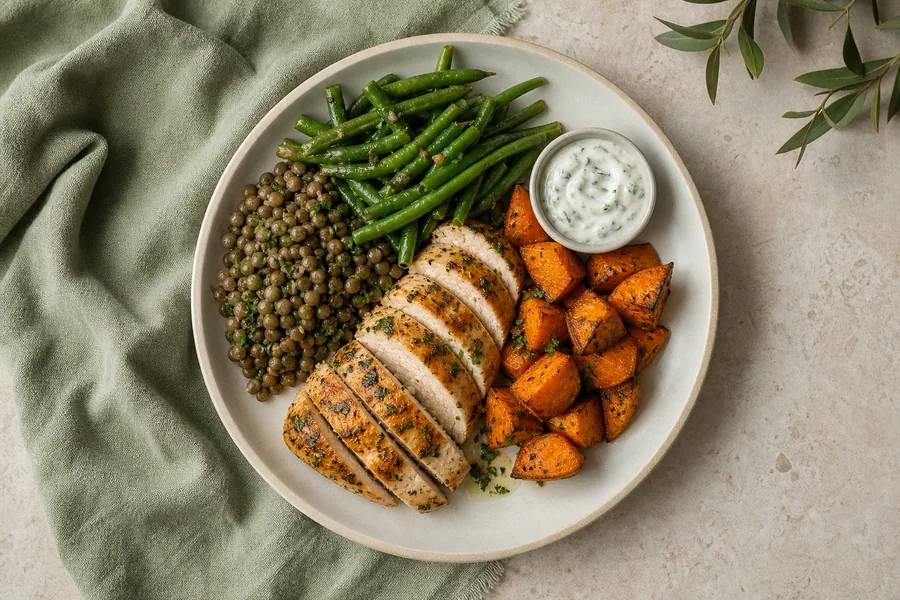
One practical way to visualize the topic. Portions and individual needs vary.
When appetite is lower, it can help to start with the most nutritionally useful part of the plate. A protein-first approach is a flexible planning tool, not a rigid rule.
Begin with a protein you tolerate, add a produce item, then include a carbohydrate or fat that makes the meal satisfying. Portions can be adjusted to your appetite and clinical needs.
A simple sequence
Choose a familiar protein.
Add color with fruit or vegetables.
Include fiber and fluids as tolerated.
Eat slowly and stop when comfortably full.
Individual needs vary. A registered dietitian or prescribing clinician can help if nausea, vomiting, dehydration, or inadequate intake persists.
Questions, answered
Frequently asked questions
CookUnity is included as a prepared-meal example. Menus, prices and availability vary, and our editorial guidance remains independent.
Can CookUnity work for someone looking for a practical protein-first plate for smaller appetites?
CookUnity can be a practical prepared-meal option if it delivers to your ZIP code and its portions, ingredients and nutrition information fit your needs. Its menu rotates through about 400 dishes across 45 cuisines, which can make variety easier. Availability varies, and CookUnity is a convenience service, not a medical or weight-loss treatment.
What should I check when choosing CookUnity meals for this goal?
Read each meal's serving size, protein, fiber, sodium, ingredients and allergen information. Then compare the price per serving, delivery fees and portion size with what you are likely to eat. Choose foods you tolerate and discuss personal nutrition needs or persistent side effects with your healthcare team.