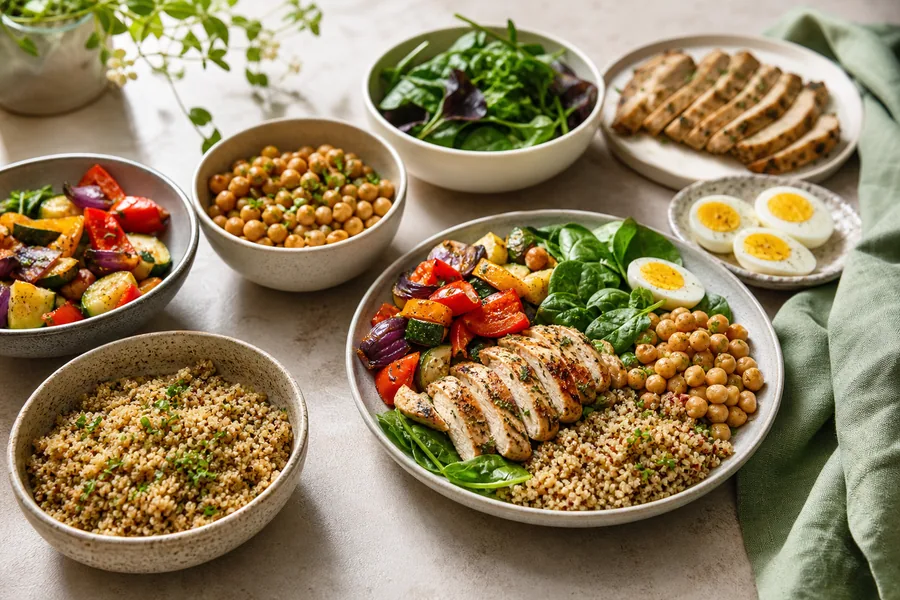
Healthy weight-loss meals are easier to sustain when the weekly plan is flexible. A rigid seven-day menu can collapse after one late meeting or change in appetite. A framework made from reusable components can absorb those changes.
The goal is not to eat perfectly. It is to make balanced meals more available, reduce wasted food, and create a routine that can be adjusted to personal needs.
Choose five anchors for the week
Start with five main meals rather than planning every eating occasion. Pick options that share ingredients and vary in effort.
For example:
- Sheet-pan chicken, vegetables, and potatoes
- Black-bean tacos with cabbage and salsa
- Salmon rice bowls with cucumber
- Lentil soup with bread and yogurt
- A prepared entree with a simple side
Plan leftovers from two anchors. Keep one backup dinner in the freezer. This creates seven dinner possibilities without seven separate recipes.
Reuse components on purpose
Cooked chicken can become a sheet-pan dinner, sandwich, or bowl. Cabbage can top tacos, become slaw, or go into stir-fry. Rice can support salmon bowls and beans. Yogurt can be breakfast, a snack, or a soup topping.
Ingredient overlap lowers decision load and helps use food before it spoils. Variety can come from sauces and formats rather than a completely different grocery list.
Build breakfast and lunch from templates
Choose two breakfast templates. One might be yogurt, fruit, and oats. Another could be eggs, toast, and vegetables. Change the fruit, vegetables, or seasonings across the week.
For lunch, use leftovers plus one assembly option. A sandwich, soup, salad, grain bowl, or snack plate can all be complete when they include protein, produce, carbohydrate, and flavor.
Planning templates protects flexibility. You know the structure without deciding every detail in advance.
Include satisfying carbohydrates
Carbohydrates do not need to be removed from a healthy weight-management plan. Whole grains, beans, fruit, potatoes, corn, and other foods provide energy and can contribute fiber and nutrients.
Choose amounts that fit your needs. Pair carbohydrates with protein and other meal components. A bowl of plain rice and a rice bowl with salmon, vegetables, and sauce are different eating experiences even when both include rice.
Make vegetables easier to use
Fresh produce is only helpful if it becomes food. Frozen vegetables are washed, cut, and ready. Canned vegetables can work too; choose versions that fit your sodium needs or rinse them when appropriate.
Roast a tray, add a frozen blend to soup or stir-fry, or keep raw vegetables that require little preparation. Sauces, seasoning, and cooking methods can make vegetables more appealing.
Plan a snack without assuming it is a problem
If there is a long gap between meals, a planned snack may prevent uncomfortable hunger. Combine two components, such as fruit and yogurt, crackers and tuna, vegetables and hummus, or nuts and fruit.
Some people do not need snacks. Others do. Appetite, schedule, medications, and meal size all matter. A snack is a tool, not evidence that a plan failed.
Use a prepared meal strategically
Prepared meals can cover the busiest day. Compare serving size, protein, fiber, sodium, ingredients, storage, and full price. Add fruit, vegetables, soup, yogurt, or another side if useful.
Subscription services also require attention to delivery fees, order minimums, skip deadlines, and cancellation steps. Convenience includes account management as well as cooking time.
Review the week without judgment
At the end of the week, ask what was eaten, what was wasted, which meals were satisfying, and where the plan demanded too much effort. Adjust one variable for next week.
Maybe you need fewer fresh vegetables and more frozen ones. Maybe lunches were too small. Maybe a service saved time but cost more than expected. This information is more useful than labeling the week good or bad.
A note on weight outcomes
Healthy meals can support an intentional weight-management plan, but results vary. Sleep, activity, stress, health conditions, medications, genetics, and access affect outcomes. Avoid programs that promise a specific result or require extreme restriction.
Professional support is particularly useful when you have medical conditions, take appetite-altering medications, experience unintended weight changes, or have a history of disordered eating.
Sources and further reading
- NIDDK guidance on a safe weight-loss program
- NIDDK healthy eating guidance
- USDA MyPlate protein foods
This weekly framework is general education and should be adapted to individual needs.