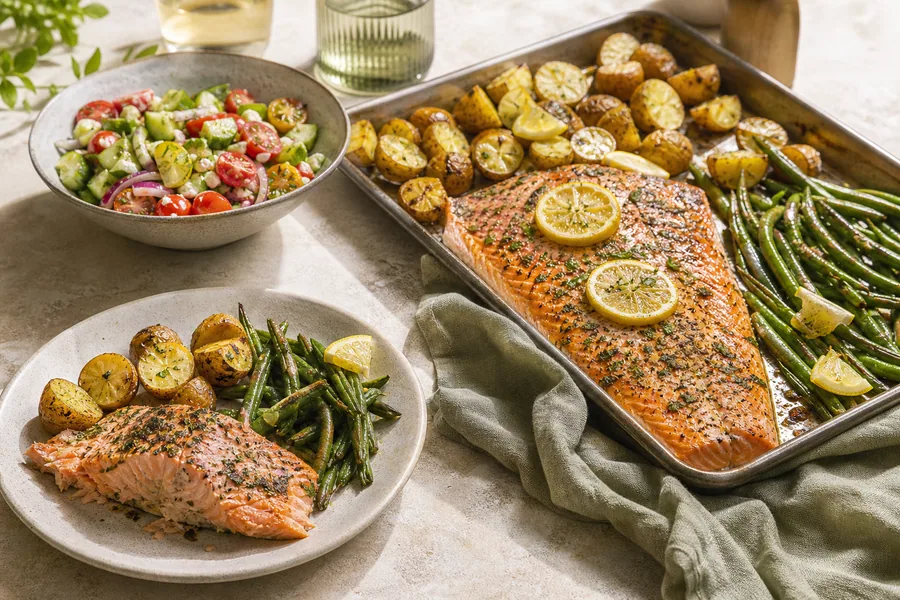
Healthy dinner meals for weight loss should still feel like dinner. They can be warm, flavorful, culturally familiar, and satisfying. The goal is not to end every day with the smallest possible plate. It is to choose a meal that contributes useful nutrition and fits a sustainable overall pattern.
These ten ideas can be adjusted for one person, a family, or leftovers. None guarantees a weight outcome.
Ten flexible dinner ideas
1. Sheet-pan chicken and vegetables. Roast chicken, potatoes, and a vegetable with olive oil and seasoning. Use tofu or fish instead of chicken.
2. Salmon rice bowl. Combine salmon, rice, cucumber, edamame, and a favorite sauce. Frozen salmon portions reduce waste.
3. Black-bean tacos. Fill tortillas with seasoned beans, cabbage, salsa, avocado, and cheese or yogurt.
4. Turkey and bean chili. Add tomatoes, peppers, and spices. Freeze portions for future dinners.
5. Tofu vegetable stir-fry. Use a frozen vegetable blend, bottled sauce, and microwaveable rice or noodles.
6. Lentil pasta night. Serve lentil or regular pasta with tomato sauce, vegetables, and chicken, beans, or cheese.
7. Loaded baked potato. Top a potato with beans, broccoli, cheese, salsa, or leftover chicken.
8. Soup and sandwich. Pair a bean, chicken, or vegetable soup with half or a whole sandwich depending on appetite.
9. Breakfast for dinner. Make eggs or tofu with vegetables, toast, and fruit.
10. Prepared entree plus a side. Choose a frozen or delivered meal and add produce, soup, yogurt, or bread if useful.
Choose the right effort level
Label dinners as cook, assemble, or heat. A cook dinner might be sheet-pan chicken. An assemble dinner could be tacos with cooked ingredients. A heat dinner might be soup or a frozen entree.
Plan no more cook dinners than your week can support. Scheduling an easy meal before a demanding evening makes the plan stronger, not less ambitious.
Make family dinners customizable
Bowls, tacos, pasta, potatoes, and sandwiches allow each person to choose components and amounts. Put toppings on the table. One person may want extra rice, another more vegetables, and another a smaller portion.
Avoid labeling one version as the diet meal. Shared components can support different needs without making food a public judgment.
Plan leftovers before cooking
Decide whether leftovers will become lunch, another dinner, or freezer portions. Store them promptly in shallow containers and follow food-safety guidance. If your household does not enjoy leftovers, scale the recipe down.
Leftovers only save money and time when they are actually used.
Handle takeout without all-or-nothing rules
Takeout can fit. Look for a meal with a protein and produce, choose a portion that feels comfortable, and save extra food if you want. Sauces or dressings on the side may offer flexibility, but they are not required.
Remember that a restaurant portion and a label serving are not personal prescriptions. Hunger varies. One takeout dinner does not determine long-term progress.
Keep dinner satisfying
If dinner repeatedly leads to grazing all evening, consider whether it contained enough food, protein, carbohydrate, fiber, and flavor. A very light dinner may not match your needs.
You can add a planned snack if there is a long gap before bed or if hunger returns. Food timing should also account for reflux, sleep, diabetes management, and medication instructions where relevant.
Create a dinner decision ladder
When energy is high, cook the planned meal. When it is moderate, use prepared components. When it is low, choose a backup dinner. This ladder eliminates the need to improvise from zero.
Write three options on the refrigerator. For example: cook salmon bowls, assemble bean tacos, or heat lentil soup. All three are legitimate dinners.
Review the whole pattern
Dinner is one part of the day. It does not need to compensate for lunch, and it does not need to be perfect. Look across the week for variety in proteins, produce, grains, and flavors.
If an intentional weight-management plan is appropriate, seek a sustainable approach that meets nutritional needs. Contact a qualified professional for rapid, unintended weight change, persistent digestive symptoms, or concerns about restrictive eating.
Sources and further reading
These dinner ideas provide general education and can be adapted with individual clinical guidance.